
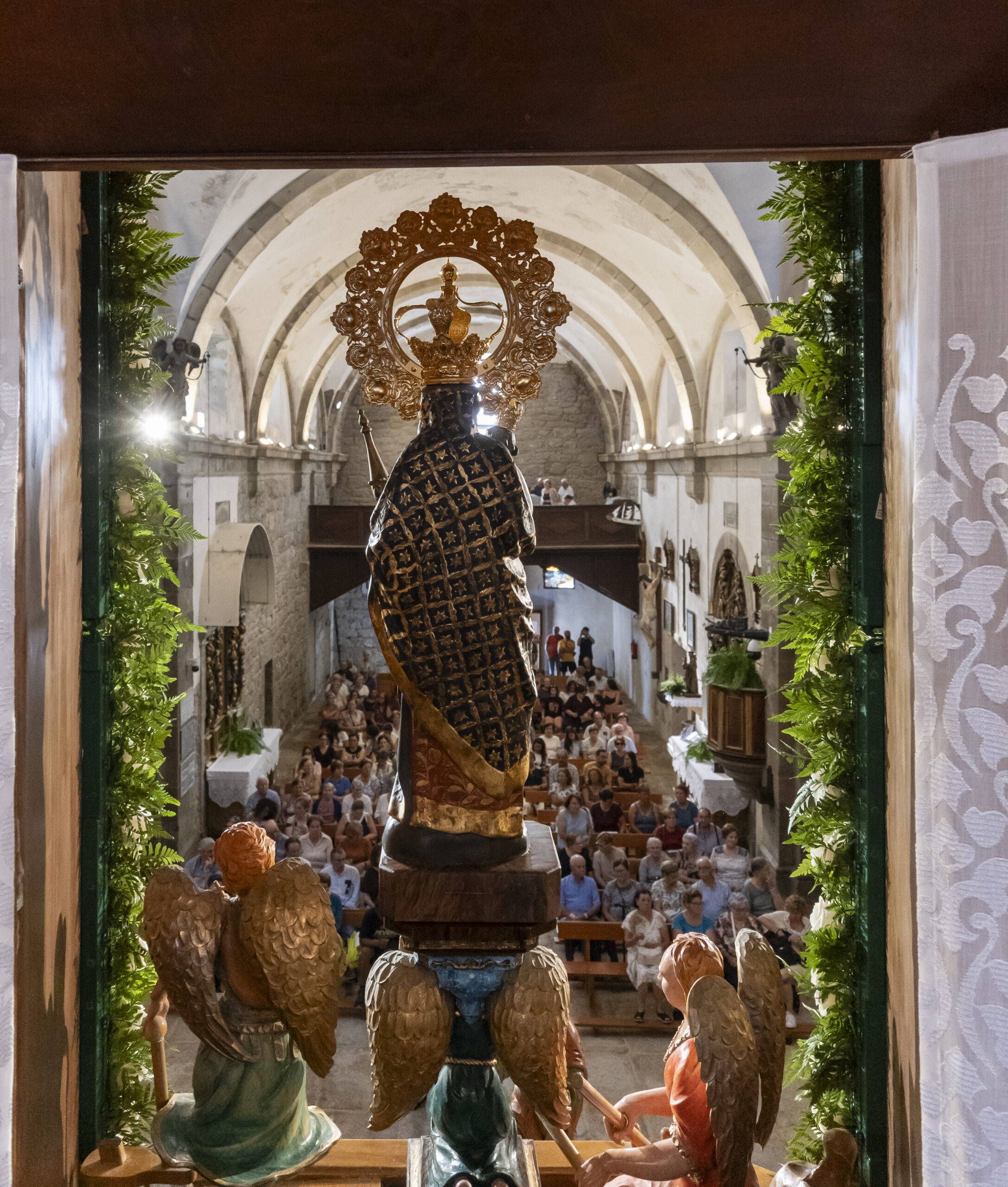
The Pilgrimage of the Virgin of La Barca concluded its 2026 edition after four days during which Muxía once again brought together thousands of people for one of the town’s most important celebrations.
This year’s event was also marked by a significant change in the festival’s organization, as, for the first time in its history, the Muxía City Council itself was directly responsible for organizing the Romería de la Barca.
The festivities took place from Friday, September 11, through Monday, September 14, combining the pilgrimage’s religious and traditional ceremonies with a wide range of musical and festive activities aimed at audiences of all ages.
The City Council particularly highlighted the large turnout on Friday—with a program designed to attract a younger audience—and the response on Monday, featuring performances geared toward an older audience. Both days saw an exceptionally high turnout this year compared to what is typical for these days of the pilgrimage.
Good weather accompanied the celebration and also contributed to the high turnout. The Pilgrimage also reaffirmed its increasingly international character, with numerous visitors from other countries coming to Muxía to experience and participate in one of its most iconic celebrations.
Four Days of Tradition and Music
The pilgrimage began on Friday with the opening speech in the Plaza del Voluntariado “Coído,” where the concert by Sés also took place. That evening, 9Louro, Disco Móbil Impacto, and Orquesta Bomba headlined a program specifically aimed at younger audiences, on a day that drew a large crowd.
On Friday, Saturday, and Sunday, Muxía also hosted the “A paisaxe que sabe” craft market, organized by the Provincial Council of A Coruña, which was part of the festival’s program throughout the three days.
On Saturday, París de Noia and the Orquesta Fuego headlined one of the festival’s highlight nights, which also featured the traditional fireworks display.
Sunday featured some of the festival’s most traditional moments. The day included the traditional procession of the Virgin of the Boat, which carried the statue from the Shrine to the port and, from there, to the parish church, as well as the Mass of the Virgin of the Boat and the subsequent setting off of Galicia’s largest firework display, which once again amazed the large crowd gathered this year. The program continued with an afternoon concert by Mar Dávila and, in the evening, performances by Satélites and Orquesta Magos.
On Monday, the Virgin returned to the Shrine, where Mass was celebrated at 12:00 p.m. The final day of the pilgrimage also featured performances by Olympus and Escaparate, with a program that particularly appealed to an older audience and extended the high turnout experienced throughout the pilgrimage to the very last day.
Another new feature introduced this year was the reorganization of some afternoon schedules, reducing the number of parades during certain time slots to help balance the festive atmosphere with the need for rest among residents and visitors. The evaluation conducted after the pilgrimage specifically highlighted a calmer, more family-friendly atmosphere and greater respect for rest periods.
Acknowledgment of Collaboration
The Mayor’s Office extends its gratitude to everyone who, in one way or another, participated in and contributed to the success of the 2026 Romería de la Barca, an edition in which the City Council took on the direct organization of the celebration for the first time.
The City Council also thanks the residents and the many people who came to Muxía over the four days to participate in the various events on the program.
Security and Emergency Response Plan
The large number of visitors required a significant security and emergency response plan. Over the course of the four days, the pilgrimage had two ambulances and six paramedics on hand, in addition to numerous personnel from Civil Protection, the Local Police, and the Civil Guard.
The event took place without any notable incidents, bringing to a close four days of continuous activity and large crowds in Muxía.